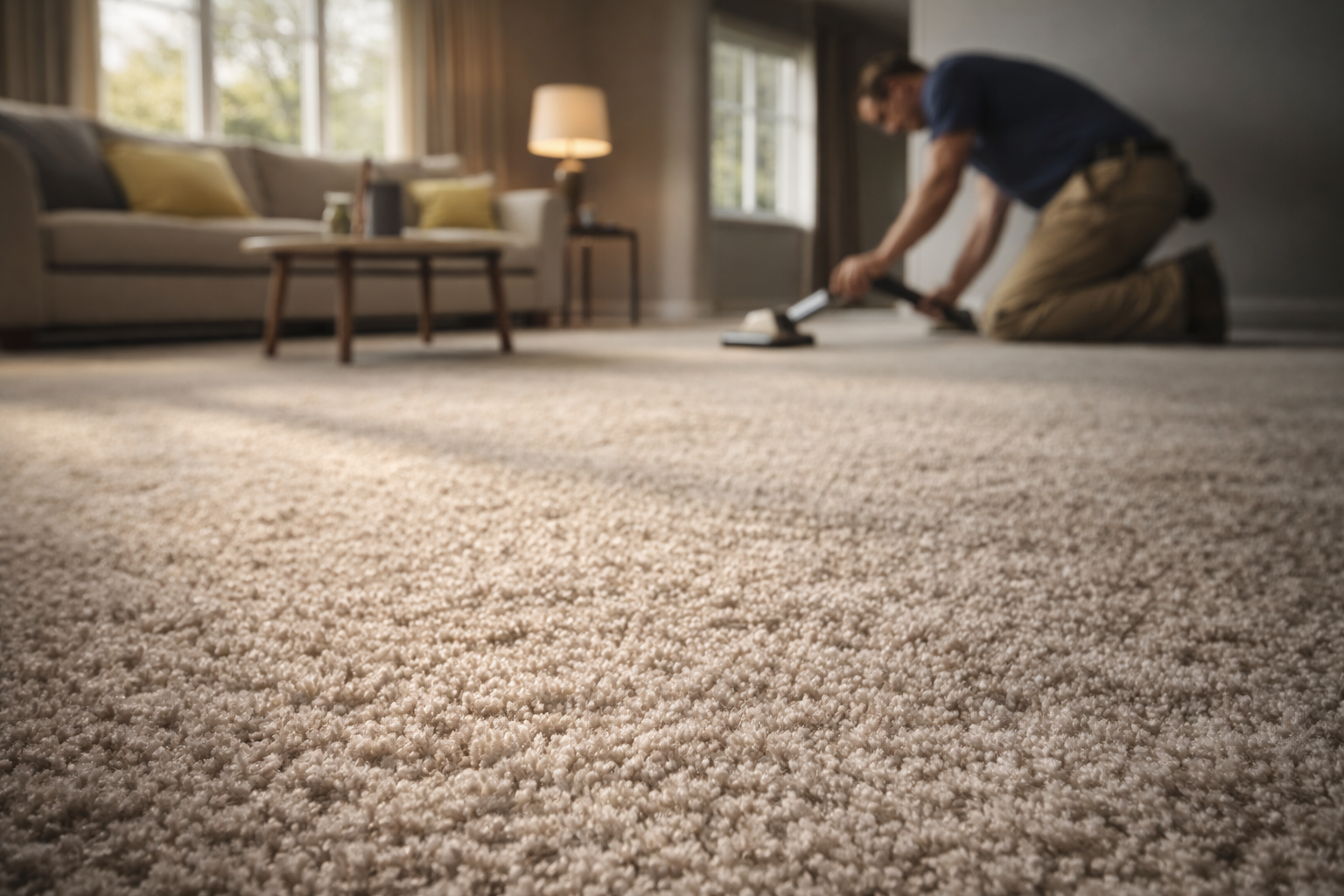
In the United States, carpet flooring still accounts for nearly half of all residential floor coverings. Industry data show that carpeted floors can reduce impact noise by up to 30 percent while improving thermal insulation, helping keep rooms warmer in colder months. These benefits explain why carpet remains a popular flooring choice for homeowners seeking comfort, quiet, and value.
If you are planning a flooring project and want the perfect flooring for your space, this guide explains how carpet flooring works, where it performs best, and how to choose the right option for your home.
Table of Contents
What Is Carpet Flooring?
Carpet flooring is a soft floor covering made from woven or tufted fibres attached to a backing system and installed across a room or in modular sections. Unlike hard surface flooring such as hardwood, vinyl, laminate, or tile, carpet provides a cushioned surface that feels warmer and softer underfoot.
This flooring option is commonly used in residential spaces such as bedrooms and living rooms, as well as in commercial interiors where noise reduction and comfort are priorities. Homeowners often choose between traditional wall-to-wall carpet and modular carpet tile, depending on layout, budget, and maintenance preferences.
Types of Carpet Flooring
Understanding the types of carpets available helps you make a smarter decision that fits your lifestyle and flooring needs.
Carpet by Fibre Type
Nylon Carpet Fibre
Nylon is widely considered the most durable carpet fibre. It holds its shape well, resists wear, and performs best in high-traffic areas such as hallways, stairs, and living rooms.
Polyester Carpet Fibre
Polyester is known for its softness and strong stain resistance. It is a popular choice for bedrooms and living rooms where comfort matters more than heavy foot traffic.
Wool Carpet Fibre
Wool is a natural carpet fibre that offers excellent insulation, durability, and a premium feel. While it comes at a higher cost, it provides long-term performance and comfort.
Carpet by Construction and Pile Style
Pile style determines how the carpet looks and feels. Cut-pile carpets have yarn tips that are cut, creating a plush, comfortable surface. Loop pile carpets use uncut loops, which improve durability and make them ideal for foot traffic. Cut-loop carpets combine both styles, offering texture and visual interest while maintaining balance between comfort and performance.
Pile Height, Density, and Performance
Pile height refers to how tall the carpet fibres stand, while density measures how closely packed those fibres are. Low-pile carpet performs best in high-traffic areas because it resists crushing. Medium-pile carpet balances softness and durability. High-pile carpet feels luxurious but requires more maintenance. In most cases, density matters more than thickness for long-term durability.
Carpet Dyeing Methods
Carpet colour and fade resistance depend on how fibres are dyed. Solution-dyed fibres lock in colour during manufacturing, making them highly stain-resistant. Piece-dyed carpets allow more colour variety. Printed patterns are used to create decorative designs while maintaining performance.
Carpet Tiles vs Wall-to-Wall Carpet
What Are Carpet Tiles?
Carpet tile is a modular flooring solution made from individual square tiles installed together to form a finished surface. Carpet tiles are commonly used in offices, apartments, and modern homes where flexibility matters.
Why Carpet Tiles Are Popular
Carpet tiles offer design freedom, easier replacement, and faster installation. If one tile becomes damaged, it can be replaced without disturbing the rest of the floor. They also provide strong acoustic and insulation benefits, making them an attractive flooring option for busy or shared spaces.
When Wall-to-Wall Carpet Is a Better Choice
Wall-to-wall carpet creates a seamless, cozy appearance that many homeowners prefer for bedrooms and low-traffic living areas. It often costs less upfront and delivers a uniform look that feels softer and more traditional.
Pros and Cons of Carpet Flooring
Understanding the pros and cons of carpet helps you avoid surprises after installation.
Advantages of Carpet
Carpet provides warmth, softness, and comfort underfoot. It absorbs sound, reduces noise, and improves indoor acoustics. Carpet also offers slip resistance and safety, especially for children and older adults. Compared to many flooring types, carpet is cost-effective to install and available in a wide range of colours and textures.
Cons of Carpet Flooring
The main cons of carpet flooring include maintenance requirements and moisture sensitivity. Carpet can trap dust, allergens, and mites if not vacuumed regularly. Spills must be cleaned quickly to prevent staining, and carpet generally has a shorter lifespan than tile or hardwood flooring.
How to Choose the Right Carpet Flooring for Your Home
Room-by-Room Guidance
Bedrooms benefit from plush carpet that feels soft and warm. Living rooms need more durable fibres that handle foot traffic without losing appearance. Stairs and hallways perform best with dense, low-pile carpet that resists wear. Rentals and apartments often use stain-resistant carpet to reduce long-term costs.
Special Flooring Needs
Homes with pets should focus on stain-resistant fibres and tighter pile structures. Allergy-sensitive households benefit from low-pile carpet paired with regular vacuuming. In colder climates, carpet works as a natural insulator, helping rooms feel warmer.
Carpet Padding, Backing, and Underlay Explained
Padding plays a critical role in comfort and longevity. A dense underlay supports the carpet, improves insulation, reduces noise, and prevents premature wear. While thicker padding feels softer, density is more important for durability. Proper backing and underlay can extend carpet life by several years.
Carpet Installation Methods
Most residential carpet is installed using a stretch-in method that allows flexibility and comfort. Glue-down installation is common in commercial spaces where stability matters. Carpet tile installation is often the easiest to install and repair, making it attractive for DIY-friendly projects.
Carpet Maintenance, Cleaning, and Longevity
Regular vacuuming removes dust and debris before it damages fibres. Spills should be cleaned immediately to avoid stains. Professional deep cleaning, either steam or dry cleaning, is recommended every 12 to 18 months. With proper care, carpet flooring remains functional and attractive for eight to fifteen years.
Carpet Flooring Cost Breakdown
Carpet material costs typically range from $2 to $8 per square foot, depending on fibre quality. Padding, underlay, and installation add to the total cost. Compared to hardwood or tile, carpet remains one of the most cost-effective flooring types for homeowners.
Carpet Flooring vs Other Flooring Options
Compared to hardwood, carpet feels warmer and quieter but does not last as long. When compared to luxury vinyl, carpet offers better softness and acoustic comfort, while vinyl performs better in moisture-prone areas. Each flooring choice depends on lifestyle and room use.
Eco-Friendly and Sustainable Carpet Flooring
Many modern carpets use recycled fibres and low-VOC materials to improve indoor air quality. Certifications from organizations like the Carpet and Rug Institute and the U.S. Environmental Protection Agency help homeowners identify sustainable options.
Is Carpet Flooring Right for You?
Carpet flooring is an ideal choice if comfort, warmth, and noise reduction matter most. If your space requires moisture resistance or minimal maintenance, other flooring types may be a better fit.
Frequently Asked Questions
Carpet flooring offers several benefits, including comfort, warmth, sound insulation, and affordability. The soft surface provides underfoot cushioning, reduces noise in a room, and can make living spaces feel warmer and more comfortable than hard flooring.
The main disadvantages of carpet flooring include higher maintenance, potential stain issues, and a shorter lifespan compared to hard flooring. Carpets can trap dust, allergens, and dirt, which means regular vacuuming and occasional deep cleaning are necessary.
The most common types of carpet include cut pile carpet, loop pile carpet, and cut-and-loop carpet. Each type offers different textures, durability levels, and visual styles suitable for various rooms in the home.
Carpet flooring typically costs between $2 and $12 per square foot, depending on the material, quality, and brand. Additional costs may include carpet padding, installation, and removal of old flooring.
Popular carpet materials for residential homes include nylon, polyester, olefin, and wool. Nylon is known for durability, polyester offers softness and affordability, while wool provides natural comfort and long-term performance.
Most carpet flooring lasts 5 to 15 years, depending on the material quality, foot traffic, and maintenance. High-quality carpets with proper care and padding can last longer, especially in low-traffic areas.