Poor carpet installation is one of the top reasons homeowners replace carpet flooring early, regardless of the type of carpet they choose. According to flooring industry studies, improper installation techniques can cause premature wear and reduce carpet longevity by 30–40 percent, even when high-quality materials are used across both residential and commercial spaces.
Understanding the types of carpet installations available today and how each installation method works helps you choose the right option for your home. With many traditional carpet installation methods and newer systems entering the market, knowing the differences can prevent costly mistakes. If you want your new carpet to stay tight, comfortable underfoot, and attractive for years, proper installation matters more than most people realize.
This guide is written for every homeowner, remodeler, property manager, or buyer trying to make informed decisions about professional installation and long-term flooring performance.
Table of Contents
Understanding the Basics of Carpet Installation
What Carpet Installation Actually Involves
A proper carpet installation process starts long before the carpet touches the floor. Installation involves preparing the subfloor, choosing the correct carpet pad, measuring and cutting accurately, and securing the carpet using one of the installation methods available. The chosen method allows the carpet to perform correctly over time.
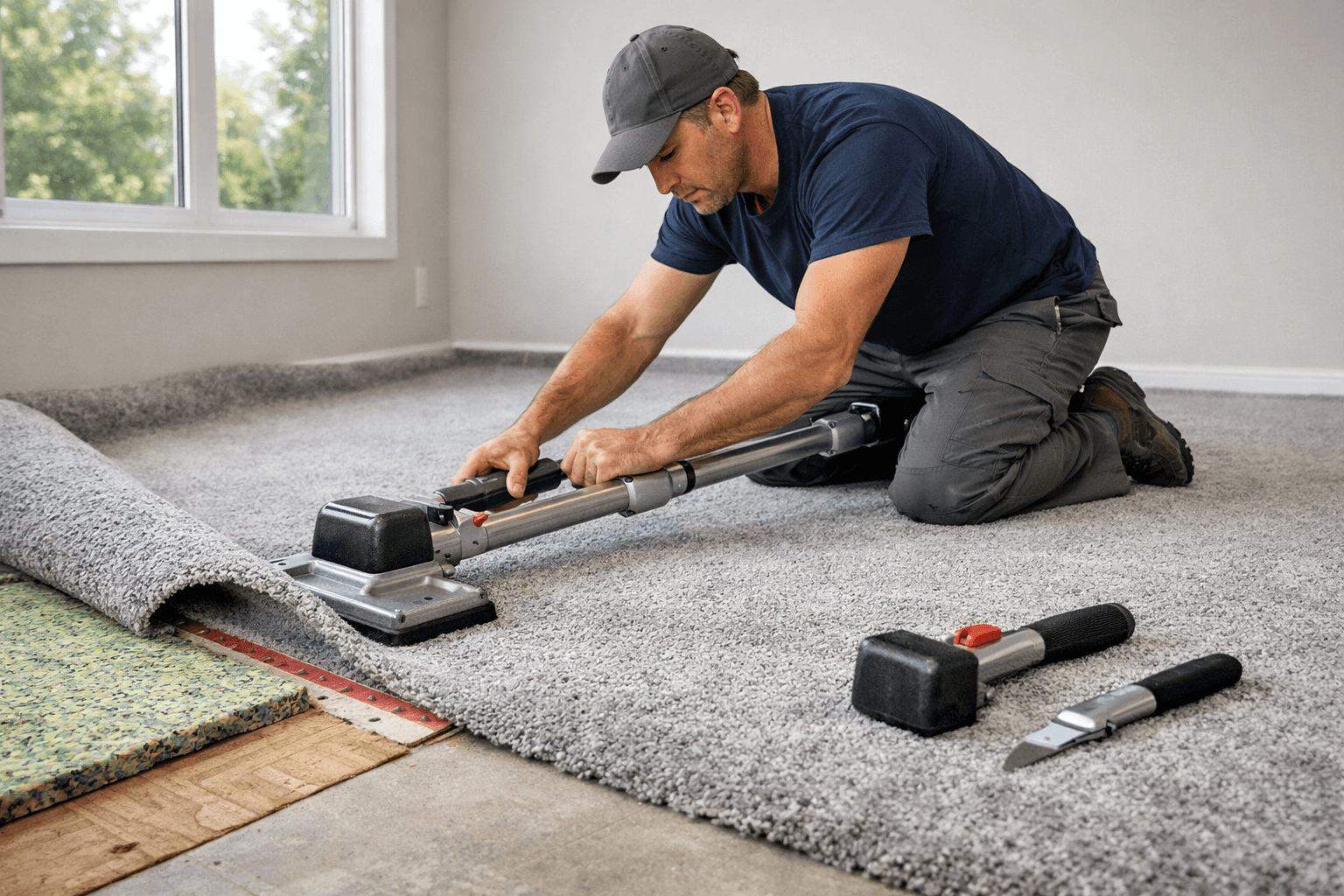
Depending on the installation systems used, the installer may stretch the carpet using power stretchers and knee kickers, which are used to pull the carpet tight, fasten it with tack strips, or adhere it directly to the subfloor using adhesive. In some cases, the carpet is then glued or fully glued to the subfloor. Final steps include seam placement, edge finishing around the perimeter of the room, and inspection to confirm the carpet is properly installed, and the carpet installed remains smooth and secure.
Why the Installation Method Matters More Than You Think
The installation method affects how the carpet fibers respond to foot traffic, how air flows beneath the carpet, and whether the surface stays smooth or develops a ripple or wrinkle. A stretched carpet that is installed correctly resists movement and helps the carpet maintain its original appearance longer.
Flooring experts agree that most carpet failures are installation-related, not product-related. As one certified flooring installer explains:
“We replace a lot of carpet that failed early. In most cases, the carpet was fine. The installation was not.”
Main Carpet Installation Methods Explained Clearly
Stretch-In Carpet Installation (Traditional and Most Common)
What Is Stretch-In Installation
Stretch-in installation is the most traditional and widely used carpet installation method in residential settings and remains a popular installation choice. The carpet is installed over a pad, then stretched tight and secured around the perimeter using tack strips. This method ensures the carpet stays carpet-tight across the entire floor.
Pros of Stretch-In Installation
Stretch-in offers superior comfort and cushioning, better airflow beneath the carpet, and improved moisture tolerance. Because the carpet is not glued, future replacement or repairs are easier. This method works with most residential carpet types and backing systems, which is why stretch-in remains the preferred option for many homeowners.
Cons of Stretch-In Installation
Stretch-in requires skill and professional tools. Without proper technique, including the correct use of a power stretcher, the carpet may loosen over time and develop ripples.
Why Stretch-In Installation Still Matters Today
Some assume stretch-in is outdated or less effective compared to newer methods. In reality, stretch-in installation continues to stand as a primary method in modern homes. Today’s carpet fibers and backing systems are designed so the carpet maintains comfort and appearance when properly stretched rather than bonded.
Glue-Down Carpet Installation
What Is Glue-Down Installation
Glue-down installation involves adhering the carpet directly to the subfloor using commercial-grade adhesive, or in some cases, to a pad first. This direct glue-down installation approach is often used in commercial spaces and mixed-use environments.
Types of Glue-Down Installation
Direct glue-down installation means the carpet is glued directly to the subfloor.
Double glue-down installation uses adhesive to secure a pad first, then the carpet on top, creating a firmer surface.
Pros of Glue-Down Installation
Glue-down provides a strong, secure bond and a low-profile surface. This method is often used in high-traffic areas where stability is critical and where a stick installation helps control movement.
Cons of Glue-Down Installation
Glue-down makes removal difficult and can trap moisture if installed poorly. Comfort underfoot is reduced compared to stretch-in installation, especially without a quality carpet pad.
Carpet Tiles Installation
What Are Carpet Tiles
Carpet tiles are modular squares installed individually, offering flexibility across residential and commercial spaces. Self-adhesive carpet tiles offer convenience and easier access for repairs.
Pros of Carpet Tiles
Damaged sections can be replaced without removing the entire floor. Carpet tiles work well in basements, offices, and areas where frequent access beneath the carpet may be required.
Cons of Carpet Tiles
Seams can be visible, and the surface feels firmer and less plush than broadloom carpet, especially in living spaces.
Self-Adhesive Carpet Tiles
How Self-Adhesive Carpet Tiles Work
These tiles use a peel-and-stick backing system designed for fast placement, making them a common choice among newer methods for quick updates.
Pros and Cons
They are DIY-friendly and fast to install, but adhesive strength can weaken over time. They are not ideal for high-moisture areas or long-term durability.
Cut-to-Fit Carpet Installation
Cut-to-fit is used for small areas or temporary applications. Unlike stretch-in, the carpet is not stretched tight, which limits durability and appearance. This method is rarely recommended for primary living spaces.
Comparing Carpet Installation Methods
Stretch-in offers the best comfort and flexibility, while glue-down provides stability for heavy traffic. Carpet tiles offer replaceability but less softness. Understanding the primary methods helps homeowners choose the installation method that best matches usage, moisture exposure, and long-term plans.
Choosing the Right Carpet Installation Method for Your Space
Bedrooms and living rooms benefit most from stretch-in installation, especially when comfort is a priority. Basements may require glue-down or carpet tiles due to moisture concerns. Stairs require professional stretch-in work, while commercial spaces often use glue-down for durability.
Key factors include foot traffic, moisture exposure, subfloor condition, and overall carpet selection.
Carpet Padding: The Hidden Factor That Impacts Installation Success
Why Carpet Padding Matters
The carpet pad absorbs impact, protects fibers, reduces noise, and improves insulation. Without the right pad, even the best installation method can fail.
Choosing the Right Carpet Padding
Density matters more than thickness. Stretch-in requires resilient padding, while glue-down needs firm support. Choosing the correct pad ensures the carpet maintains its structure and appearance.
Professional vs DIY Carpet Installation
DIY may work for self-adhesive carpet tiles, but broadloom carpet requires professional tools and experience. Improper DIY installation often leads to ripples, wrinkles, and voided warranties.
Professional installers understand how different carpet installation methods affect performance and durability across different environments.
Carpet Installation Costs Explained
National averages show carpet installation costs range from moderate to higher, depending on the installation method, room layout, subfloor repairs, and padding quality. Cutting corners on installation often results in higher long-term costs.
Final Thoughts: Choosing the Right Carpet Installation Method
The right carpet installation method matters more than trends or shortcuts. Comfort, durability, and performance depend on choosing the correct method and ensuring the carpet is properly installed. When in doubt, schedule a consultation with a professional installer and choose based on lifestyle, not price alone.
For further guidance, explore related resources on floor preparation, carpet maintenance, and professional flooring installation services.
Common Carpet Installation Myths Debunked
Glue-down is not always more secure. Stretch-in does not limit design choices. Padding always matters. Installation quality varies widely between installers, even when using the same materials.
Final Inspection and Long-Term Maintenance
A proper installation shows smooth seams, tight stretching, and clean edges. After installation, wait before vacuuming, use furniture pads, and follow warranty guidelines to help the carpet maintain its original condition.
Frequently Asked Questions
The most common carpet installation method is stretch-in installation, also known as tack strip installation. This method stretches the carpet tightly over a carpet pad and secures it along the perimeter using tack strips. Stretch-in is widely used in residential homes because it provides comfort, flexibility, and long-term performance.
Stretch-in carpet installation is generally better for residential spaces because it offers more cushioning, better airflow, and easier future replacement. Glue-down installation is often preferred in commercial areas with heavy foot traffic where maximum stability and a low profile are required.
Glue-down carpet installation is typically used in commercial spaces, offices, and high-traffic environments. The carpet is adhered directly to the subfloor using adhesive, creating a firm and stable surface that resists movement and shifting under heavy use.
Carpet tiles can be a good option for basements, playrooms, or home offices where flexibility and easy replacement are important. However, they may feel firmer and show visible seams compared to traditional broadloom carpet installed using stretch-in methods.
Carpet installation typically takes one day for an average room, though larger or more complex layouts may require additional time. Preparation, subfloor condition, seam placement, and the chosen installation method all affect total installation time.
DIY carpet installation is possible with peel-and-stick carpet tiles, but traditional stretch-in or glue-down carpet installation requires professional tools such as power stretchers and knee kickers. Improper DIY installation often leads to wrinkles, ripples, and reduced carpet lifespan.
Carpet ripples or wrinkles usually occur due to improper stretching during installation or failure to use a power stretcher. Poor installation technique is one of the leading causes of premature carpet failure and can reduce carpet lifespan significantly.
Yes, carpet padding plays a critical role in comfort, durability, and insulation. The correct carpet pad absorbs impact, reduces noise, and helps the carpet maintain its appearance. Choosing the wrong padding can compromise even a high-quality installation method.