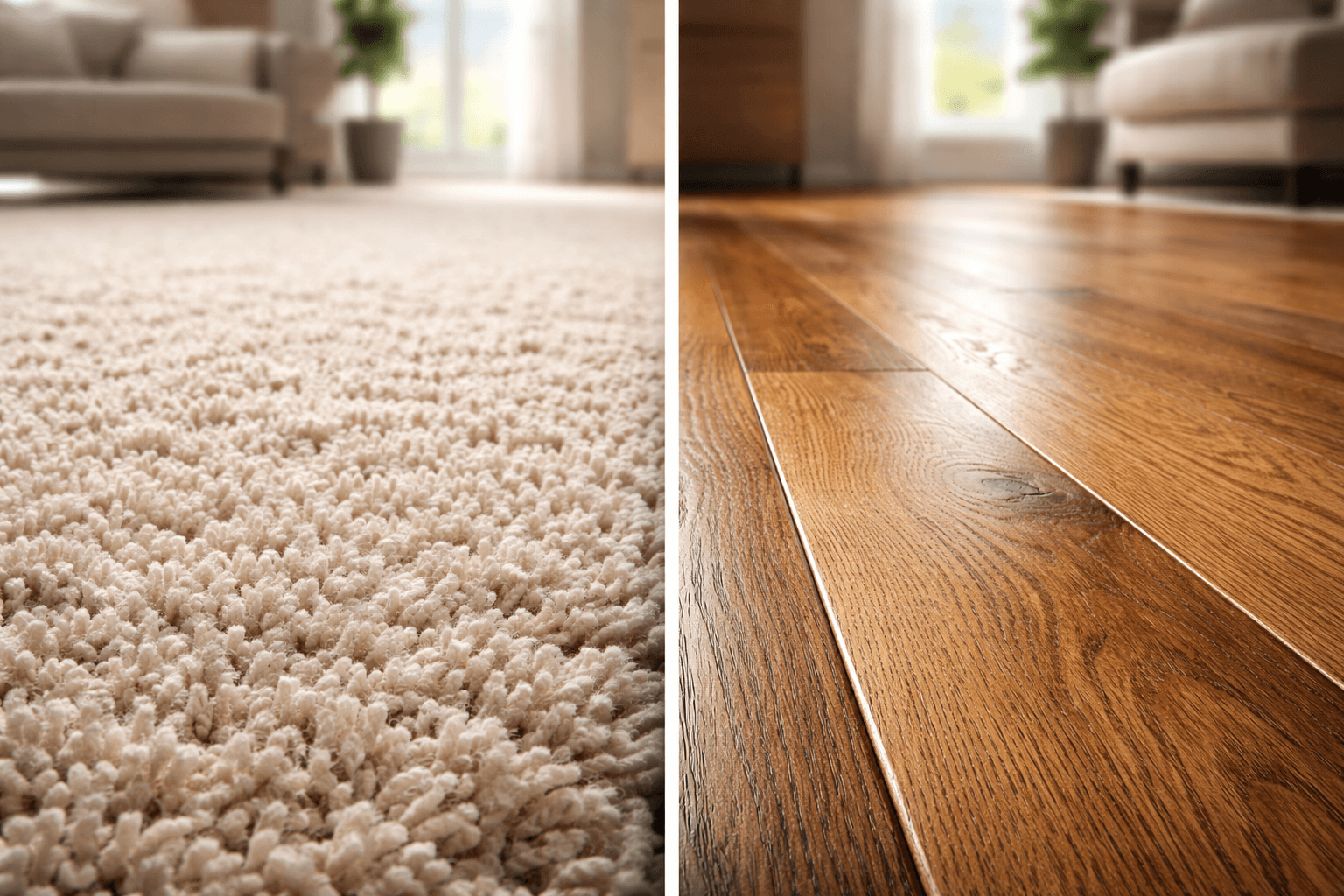
According to the National Association of Realtors, installing a new hardwood floor can recoup 70 to 80 percent of its cost at resale. At the same time, industry data show that the average cost per square foot for carpet installation is significantly lower than that of hardwood flooring. When it comes to carpet vs hardwood, or even hardwood floor vs carpet, the decision affects comfort, durability, resale value, and daily living.
If you are choosing between carpet and hardwood flooring, this guide will help you understand the real differences. We will compare cost, lifespan, maintenance, moisture resistance, comfort, health impact, and long-term value so you can feel confident when choosing flooring. By the end, you will know which type of flooring is the best option for your home and your budget.
Table of Contents
Quick Comparison: Carpet vs Hardwood Overview
Here is a simplified view of the differences between carpet and hardwood flooring, including carpet vs wood floors and other common flooring choices.
Cost
Carpet typically costs less per square foot upfront. Hardwood flooring costs more to install but may last longer.
Lifespan
Average carpet lasts 8 to 15 years. Hardwood floors can last for decades and may even last a lifetime with proper care.
Maintenance
Carpet requires regular vacuuming and deep cleaning. Hardwood floors require sweeping and occasional refinishing.
Comfort
Carpet feels softer underfoot and warmer in a bedroom. Hardwood offers a firm surface and works well with area rugs.
Resale Value
Hardwood flooring adds more resale value in most markets. Carpet may lower the value in high-end homes.
Water Resistance
Hardwood is vulnerable to standing water. Carpet can trap moisture and odors.
Allergy Impact
Carpet fibers can trap dust and allergens. Hardwood floors are easier to clean for allergy-sensitive homeowners.
Cost Comparison: Installation Cost and Long-Term Value
Upfront Material and Installation Cost
Carpet installation usually ranges from $3 to 7 dollars per square foot, depending on the quality of carpet and padding. Some premium options may go higher, especially if you are looking for carpet with stain resistance or thicker padding.
Hardwood flooring costs typically range from $8 to 20 per square foot installed. Solid hardwood and engineered hardwood vary in price. Hardwood installation requires more labor and skill than installing carpet.
Because of this, many homeowners go with carpet when the budget is tight, especially when installing new flooring in multiple rooms.
Long-Term Costs
The carpet may need replacement after 10 years. Replacing carpet multiple times increases long-term cost. Installing new carpet more than once over the decades can add up.
Hardwood floors require refinishing every 7 to 15 years. Refinishing is cheaper than full replacement. Hardwood floors typically require less frequent full replacement, and unlike carpet, they can be restored instead of removed.
Lifetime Value Comparison
When you calculate the cost over 30 years, hardwood generally delivers stronger long-term value. Carpet is cheaper upfront, but hardwood flooring can last for decades and reduce repeat replacement costs. In many carpet vs wood floors comparisons, long-term value strongly favors hardwood.
Durability and Lifespan: Carpet vs Hardwood
How Long Does Carpet Lasts
Average carpet lifespan depends on traffic and quality. High-traffic living rooms may wear out in 8 years. A bedroom with light use may last longer.
Carpet often shows stains, flattening, and fiber breakdown over time. Even quality carpet can lose its appearance in busy areas.
How Long Does Hardwood Lasts
Hardwood flooring can last 30 to 100 years with proper care. Solid hardwood can be sanded and refinished multiple times. Hardwood floors offer long-term durability unmatched by most carpet flooring.
Hardwood floors typically hold up better in high-use spaces compared to carpet.
Performance in High-Traffic Areas
Hardwood tends to handle daily foot traffic better. Carpet may compress and show wear paths.
If durability is your top concern when choosing flooring, hardwood generally wins.
Resistance to Scratches and Wear
Hardwood may scratch from pets and furniture. However, it can be refinished. Carpet fibers may permanently flatten or stain and cannot be refinished.
Moisture and Climate Performance
Carpet and Moisture Issues
Carpet can trap moisture under the padding. In humid environments, this can lead to mold growth. Carpet may also absorb spills and odors.
Hardwood and Water Damage
Hardwood floor surfaces can warp when exposed to standing water. Engineered hardwood handles moisture better than solid hardwood. Hardwood is also more resistant to surface spills if cleaned quickly.
Performance in Humid Environments
In humid climates, engineered hardwood or moisture-resistant carpet backing performs better. The U.S. Department of Energy recommends maintaining indoor humidity between 30 and 50 percent to protect flooring material and indoor air quality.
Heat and Radiant Flooring Compatibility
Hardwood is compatible with radiant heating systems. Carpet reduces heat transfer and may not perform as efficiently. Hardwood is also more responsive to radiant systems in colder climates.
Maintenance and Cleaning Requirements
Daily Cleaning
Carpet requires frequent vacuuming to remove dirt and debris. Hardwood floors require sweeping or mopping.
Deep Cleaning
Carpet installation often requires professional steam cleaning every 12 to 18 months. Hardwood floors require refinishing every several years, depending on traffic.
Refinishing vs Replacement
Hardwood can be sanded and refinished instead of replaced. Carpet must be removed and replaced once worn. Unlike carpet, hardwood flooring can be restored without tearing out the entire surface.
Stain Resistance
Synthetic carpet resists stains better than older materials. Still, carpet can trap liquids. Hardwood surfaces wipe clean more easily and are often considered easier to maintain.
Comfort and Insulation
Underfoot Comfort
Carpet adds softness and warmth underfoot. Many people prefer carpet in a bedroom, especially in colder climates. A new carpet can make a space feel cozy and inviting.
Hardwood feels firm but can be softened with area rugs.
Sound Absorption
Carpet reduces noise and echo. Hardwood flooring reflects sound more, which may affect the aesthetic of your home if acoustics matter.
Thermal Insulation
Carpet adds insulation and warmth. Hardwood transfers temperature more directly.
Safety for Children and Seniors
Carpet provides cushioning during falls. Hardwood is firm but stable.
Health and Allergies
Dust and Allergen Retention
Carpet fibers can trap dust, pollen, and pet dander. Carpet can trap particles deep in the fibers, requiring regular vacuuming.
Indoor Air Quality
Hardwood floors offer easier cleaning and less allergen buildup. This supports better indoor air quality.
Mold and Moisture Concerns
Carpet can trap moisture below the surface. Hardwood may develop mold underneath if moisture persists, but surface cleaning is easier compared to carpet.
Best Option for Allergy-Sensitive Homes
Many allergy specialists recommend hardwood flooring for easier maintenance and better air circulation.
Appearance and Design Differences Between Carpet and Hardwood
Visual Appeal
Hardwood adds natural beauty and timeless style. Many buyers prefer hardwood flooring because it enhances the aesthetic of your home. Hardwood flooring can also create a seamless look in open spaces.
Carpet adds warmth and softness.
Style Variety
Carpet comes in many colors and textures. Hardwood offers various species, stains, and plank widths. Hardwood can be used in both modern and traditional homes.
Timeless vs Trend-Based Design
Hardwood flooring is considered classic. Carpet trends change more often.
Matching Interior Styles
Hardwood works well in living rooms and open floor plans. Carpet works well in bedrooms and cozy spaces. When choosing between carpet and hardwood, consider how each flooring option supports the design style you want.
Best Flooring by Room in Your Home
Living Rooms
Hardwood floors offer durability and elegance. Area rugs can soften the look.
Bedroom
Carpet is often the best choice for comfort and warmth.
Kitchen
Hardwood can be used, but must be protected from moisture.
Dining Room
Hardwood is popular for easy cleaning.
Bathroom
Neither carpet nor standard hardwood is ideal. Consider tile.
Home Office
Hardwood supports rolling chairs better than carpet.
Basement
Moisture-resistant carpet or engineered hardwood works best.
Resale Value and ROI
Impact on Home Value
Hardwood flooring adds resale value more consistently. Buyers often lean toward hardwood.
Buyer Preferences
Real estate agents report that many buyers prefer hardwood over carpet in main areas. Hardwood flooring adds perceived value to a home more than carpet in most markets.
When Carpet Makes Financial Sense
In rental properties or low-budget renovations, carpet installation can be a cost-effective solution. If you are looking for carpet for a short-term upgrade, it may be the best choice financially.
Environmental Impact
Hardwood sourcing should follow sustainable forestry practices. Look for FSC-certified wood floor products.
Carpet materials vary. Some synthetic carpet options are recyclable.
Hardwood floors can last a lifetime, reducing landfill waste from frequent replacement. Flooring can also impact the environmental footprint, depending on the material and lifespan.
Installation Process
Installing carpet is faster and less disruptive. Hardwood installation takes longer and may require sanding.
DIY carpet is easier than installing hardwood flooring. However, professional installation improves results and protects your new flooring investment.
Pros and Cons
Carpet Pros
Soft underfoot
Lower installation cost
Good for bedrooms
Carpet Cons
Shorter lifespan
Can trap allergens
May need replacement
Hardwood Pros
Last for decades
Higher resale value
Easy to maintain
Hardwood Cons
Higher installation cost
Sensitive to moisture
Can scratch
How to Decide: Choosing Between Carpet and Hardwood
Choose carpet if
You want softness in a bedroom
You are working with a lower budget
You prefer warmth underfoot
You are installing new carpet for comfort-focused rooms
Choose hardwood if
You want long-term value
You want better resale value
You want easy maintenance
You want a timeless look for your home
Consider a mixed approach if
You want hardwood in living rooms and carpet in bedrooms
You want to balance comfort and durability
You want the best type of flooring in each specific room
Final Verdict: Carpet or Hardwood Flooring
When it comes to carpet vs hardwood, the best flooring depends on your lifestyle, room usage, and budget. Hardwood offers durability and long-term value. Carpet offers softness and comfort.
If you are choosing the right flooring for your home, focus on durability, cost, comfort, and resale value. Whether carpet or hardwood flooring is right for you, understanding the pros and cons will help you make the best choice with confidence.
Frequently Asked Questions
The best choice between carpet and hardwood flooring depends on comfort, maintenance, durability, and lifestyle needs. Carpet offers warmth and softness underfoot, while hardwood flooring provides long-term durability, easier cleaning, and higher resale value.
Hardwood flooring typically lasts 25 to 100 years with proper care, while carpet usually lasts 5 to 15 years, depending on material quality and foot traffic. Hardwood can also be refinished multiple times, extending its lifespan.
Hardwood flooring is generally easier to maintain because dust, dirt, and debris can be quickly swept or mopped. Carpet requires more frequent vacuuming and periodic deep cleaning to remove trapped dust, allergens, and stains.
Yes, carpet is usually more comfortable because it provides soft cushioning, warmth, and better insulation underfoot. This makes carpet popular in bedrooms, family rooms, and spaces where comfort is a priority.
Hardwood flooring is often better for homes with pets because pet hair and dirt are easier to clean from hard surfaces. However, pet claws can scratch hardwood, so durable finishes and regular maintenance are important.