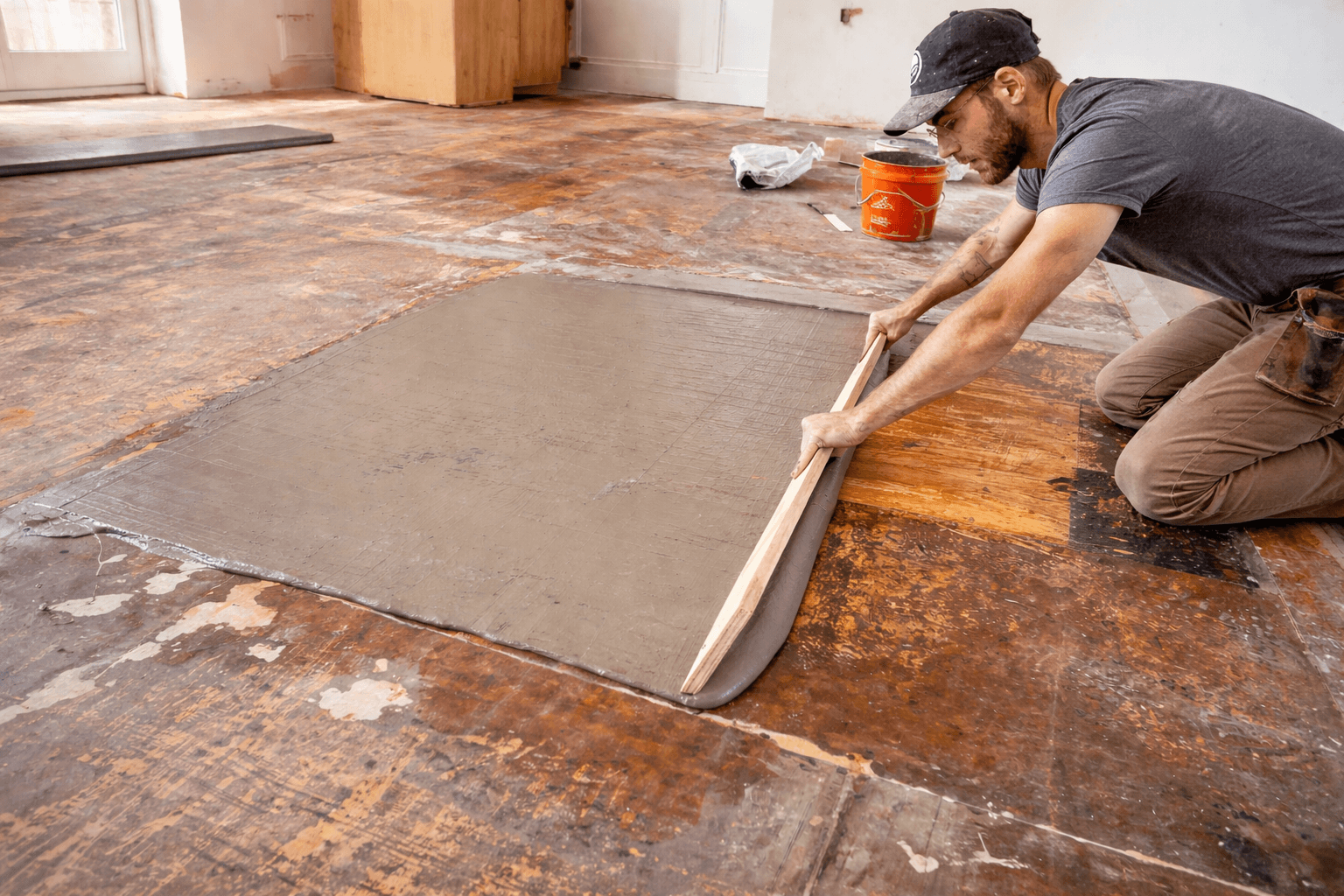
Improper subfloor preparation is responsible for up to 70% of premature flooring failures, according to installation defect reports from the National Wood Flooring Association. In many cases, these issues stem from improper installation, weak base layers, or overlooked moisture problems. Moisture intrusion alone can cause hardwood floors to cup, buckle, or fail within months.
That is why understanding the subfloor is critical before starting any flooring project.
The subfloor is the hidden structural layer that acts as the foundation beneath your visible floor. Whether you are installing hardwood, tile, laminate, or other types of flooring, your results depend on the strength of what lies underneath. A properly built subfloor provides a sturdy foundation that supports everything above it.
Let’s break it down clearly.
Table of Contents
What Is a Subfloor?
A subfloor is the structural layer of subflooring that rests on top of the joist system or a concrete slab and serves as the base for the finished floor. It supports weight, distributes load evenly, and works with underlayment and moisture barriers to protect the entire flooring system. Subfloors are made from durable materials include plywood, OSB, or concrete, depending on the construction type.
In simple terms, the subfloor is the hidden foundation beneath your visible flooring.
It acts as the structural base layer, supports all finished flooring materials, distributes weight evenly across floor joists or slabs, and allows compatibility with moisture barriers and underlayment systems.
Without a strong subfloor, even the best hardwood will fail. The entire floor depends on this structural layer for long-term performance.
For deeper installation insights, see our guide on hardwood flooring over concrete slabs.
Layers of Flooring Explained: Floor vs Subfloor vs Underlayment vs Joists
Every flooring system has layers, and each one plays a different role in ensuring your flooring project succeeds.
Floor Covering
This is the visible flooring you walk on. It may be solid hardwood, engineered wood flooring, tile, vinyl, or laminate. These different types of flooring are decorative and functional, but they rely on what sits below for stability.
Subfloor
The subfloor material sits beneath the finished flooring and serves as the structural layer that supports the entire floor. Materials include plywood and osb, as well as concrete slabs in modern homes. A wooden subfloor, such as one made from plywood or OSB, rests on top of the floor joists. In slab homes, the concrete slab performs the same function.
Many wooden systems use a layer of plywood installed perpendicular to the joists due to its strength and stability. Using plywood or osb ensures load distribution across the joist system.
Underlayment
The underlayment is often installed between the subfloor and the finished floor. It provides cushioning, sound absorption, and moisture control. Underlayment helps prevent minor subfloor issues from affecting the surface floor.
Joists
A joist is a structural beam that supports wooden subfloors. Floor joists and supports create the framework in homes with crawl space or basement foundations. Concrete slab homes do not use joists because the slab itself acts as the structural base.
Quick Comparison
| Floor | Subfloor |
| Visible flooring | Hidden structural base |
| Decorative | Structural |
| Replaceable | Long-term foundation |
| Top of the floor | Beneath your visible flooring |
The subfloor rests on top of the floor joists in framed construction, or directly on a concrete slab in slab foundations. It serves as the foundation that supports the entire floor.
Why Is a Subfloor Important?
The subfloor is key to ensuring your flooring lasts.
A strong subfloor protects structural integrity, controls moisture issues, provides a level surface, prevents sag and squeaky floors, and supports long-term durability. Without a solid subfloor, materials like hardwood, laminate, or tile may shift, crack, or warp.
When installing hardwood over concrete slabs, improper slab preparation and improper installation techniques often lead to cupping and buckling. Concrete floors allow moisture vapor transmission, which can damage wood flooring if not properly sealed.
The U.S. Department of Energy notes that moisture movement through concrete floors is one of the most common causes of interior material damage. This is why a sturdy foundation beneath your flooring system is critical.
Types of Subfloors and Their Materials
Different types of subfloors exist depending on foundation style and construction method.
1. Plywood Subfloor
A plywood subfloor consists of thin layers of wood veneer glued together. These layers of wood create strength and stability similar to plywood panels used in structural framing. It is installed perpendicular to the joists for added support.
Plywood is suitable for most types of flooring due to its strength. A plywood subfloor provides a strong subfloor system that distributes weight evenly across floor joists.
2. OSB Subfloor
OSB stands for oriented strand board. It is similar to plywood but made from compressed wood strands. Like plywood, it forms a solid subfloor surface when properly installed.
OSB subfloor panels are budget-friendly and strong, though slightly more sensitive to moisture issues than plywood. Many homes use plywood and osb as common subflooring material choices.
3. Concrete Subfloors
Concrete slab foundations act as both structural support and subfloor. Concrete subfloors are common in basement and slab homes. These concrete floors provide a sturdy foundation for new flooring installations.
Concrete subfloors require moisture testing, vapor barrier installation, and surface leveling to ensure your flooring performs properly.
4. Particleboard
Particleboard is less common today. It absorbs moisture easily and is not ideal beneath hardwood because it can swell and weaken over time.
Concrete Slab as a Subfloor for Hardwood
This is where many homeowners make mistakes.
Can You Install Hardwood Directly Over Concrete?
Solid hardwood should not be installed directly on concrete unless a sleeper system is used. Engineered wood flooring can be installed directly with proper moisture control and preparation.
Skipping moisture protection can lead to subfloor problems and premature failure.
Moisture Testing Requirements
Before flooring installation, test slab moisture using a calcium chloride test, a relative humidity probe, or a moisture meter. Installing a moisture barrier is critical. According to NWFA guidelines, ignoring slab moisture is one of the top causes of subfloor damage.
Leveling a Concrete Subfloor
To ensure your flooring sits flat, grind high spots, repair cracks, and apply self-leveling compound where needed. A level slab prevents uneven wear and adhesive failure.
How to Identify a Damaged Subfloor
Signs of a damaged subfloor include squeaky floors, soft spots, sag between joists, a moisture smell, and visible mold growth. These signs of a damaged base often appear gradually.
For concrete subfloors, look for cracks, efflorescence, adhesive failure, or moisture intrusion. If the subfloor is damaged, the finished floor will eventually fail.
Consequences of Ignoring Subfloor Problems
Subfloor damage leads to hardwood cupping, buckling, mold growth, structural instability, and expensive floor replacement. A weak foundation beneath your flooring system can destroy even premium materials like hardwood due to its strength demands.
Choosing the Right Subfloor Preparation for Hardwood Over Concrete
For slab homes, focus on correct moisture barrier selection, underlayment compatibility, glue-down versus floating installation, and radiant heating considerations.
A strong subfloor ensures your hardwood remains stable across your floors for decades. Proper preparation helps prevent long-term subfloor issues and moisture damage.
How to Determine Flooring Type and Thickness for Concrete Subfloors
Engineered wood flooring works best over slabs because it is more dimensionally stable than solid hardwood. Choose boards with a minimum 3/8 inch thickness and a strong wear layer.
Glue-down systems provide maximum stability. Floating systems offer flexibility and easier installation.
Preventing Moisture Damage in Slab Foundations
Moisture issues are common in slab homes, especially in basements.
To prevent water damage, install a vapor retarder, test slab moisture before installation, allow an acclimation period for wood products, and use moisture-resistant adhesives.
ASHRAE recommends maintaining indoor humidity between 30 and 60 percent to help prevent flooring expansion issues.
Environmentally Responsible Subflooring Choices
Sustainable subflooring material options include FSC-certified plywood, low-VOC adhesives, and engineered systems that reduce material waste. Materials like plywood sourced responsibly help create a sturdy foundation while maintaining indoor air quality.
Green building standards from the U.S. Green Building Council encourage responsible material selection for long-term durability and environmental safety.
FAQs About Subfloors
What is subfloor preparation?
Subfloor preparation is the process of inspecting, cleaning, leveling, and moisture testing the subfloor before installing new flooring. It ensures the surface is flat, dry, and structurally sound so hardwood, tile, laminate, or engineered flooring can perform properly without warping, squeaking, or failing prematurely.
Why is subfloor preparation important before installing hardwood?
Subfloor preparation is critical before installing hardwood because moisture, uneven surfaces, or structural weakness can cause cupping, buckling, and adhesive failure. A properly prepared subfloor creates a stable foundation that supports the hardwood and prevents costly flooring damage over time.
How do you prepare a concrete subfloor for hardwood?
To prepare a concrete subfloor for hardwood, you must test for moisture, repair cracks, grind high spots, and apply a vapor barrier. Engineered wood flooring can be installed over properly treated concrete slabs, but solid hardwood typically requires a sleeper system.
How do you know if a subfloor is level enough for flooring?
A subfloor is considered level enough when it meets manufacturer flatness tolerances, typically within 3/16 inch over 10 feet. Uneven subfloors must be corrected using grinding, sanding, or self-leveling compound to prevent future flooring movement and wear issues.
What happens if you skip subfloor preparation?
Skipping subfloor preparation can lead to squeaky floors, hardwood cupping, tile cracking, adhesive failure, and moisture damage. Improper installation over an unprepared surface is one of the leading causes of premature flooring failure.
Does a plywood subfloor need preparation before installing new flooring?
Yes, plywood subfloors must be inspected for moisture, loose fasteners, and structural weakness before installing new flooring. Damaged panels should be replaced, and uneven areas must be sanded or reinforced to create a strong and stable base.
Is moisture testing necessary for all subfloors?
Moisture testing is especially necessary for concrete subfloors and basement installations, but it is also recommended for wooden subfloors. Excess moisture can lead to mold growth, wood expansion, and long-term flooring damage.
Can you install underlayment without preparing the subfloor first?
No, underlayment should not be installed over a dirty, uneven, or damaged subfloor. Underlayment is designed to enhance performance, not fix structural problems. The subfloor must be properly prepared first to ensure long-term durability.
Final Thoughts
The subfloor is the unsung hero of any flooring installation.
It supports the entire floor, manages moisture issues, and protects structural integrity. Subfloors are made to create a solid foundation that supports your investment for years.
Before installing new flooring, especially hardwood over concrete, invest time in proper slab testing and preparation. Your visible flooring may be beautiful, but your subfloor is what makes it last.